
How-To
Patch Care: How to Wash, Dry and Store Patches
By the Nation Patches team · Updated · 7 min read
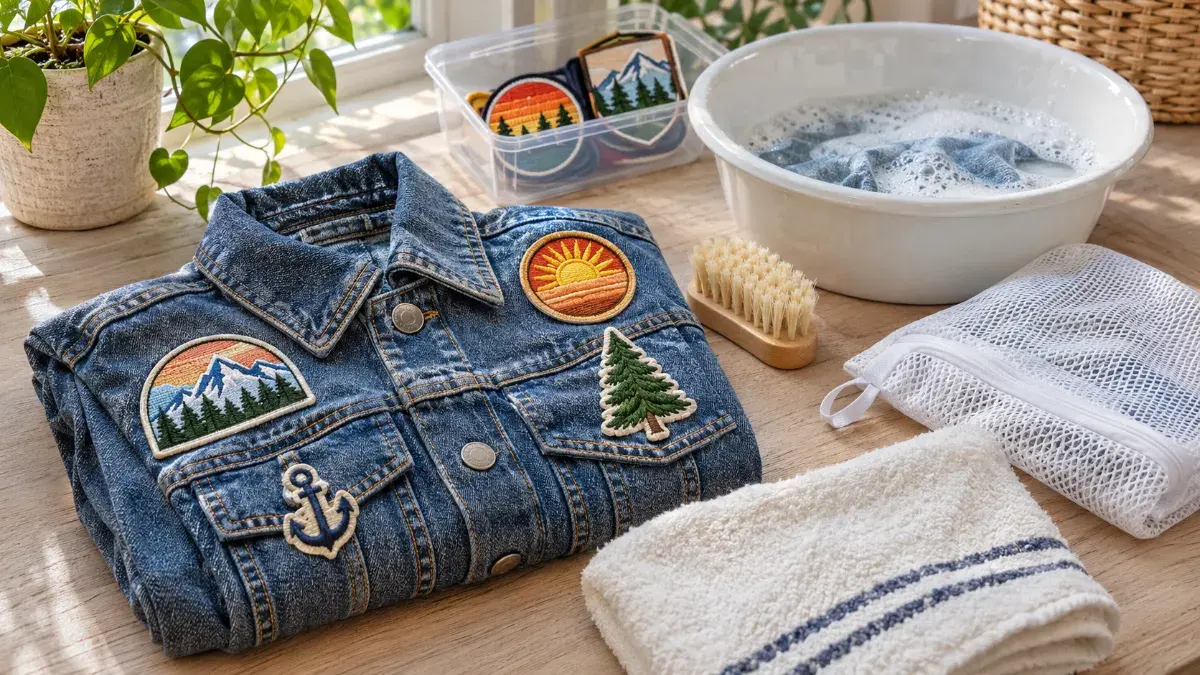
Knowing how to wash patches is the easiest way to keep them looking new. A patch that is washed and dried with care keeps its color, its edges and its hold for years.
The good news is that patch care is simple. Turn the garment inside out, use cool water, skip the high heat and store loose patches flat. Below, we explain each step and give tips for every patch type and backing.
How to Wash Patches: The Quick Rules
Most patch damage comes from heat, friction and harsh soap. These rules prevent almost all of it.
- Turn the item inside out so the patch doesn't rub against other clothes or the drum.
- Use cold or cool water and a gentle or delicate cycle.
- Use a mild detergent. Skip bleach and strong stain removers on or near the patch.
- Wash with similar colors and avoid heavy items like zippers, jeans with rivets or towels with rough loops.
- Air dry when you can. If you use a dryer, choose low heat.
- Check the edges after each wash and fix any lifting right away.
Hand Washing Patches Step by Step
Hand washing is the gentlest choice. It is the best way to clean a jacket, vest or hat that you want to protect.
- 01
Fill a basin
Use cool water and a small amount of mild detergent. Mix it well before you add the item.
- 02
Soak briefly
Let the item soak for 10 to 15 minutes. This loosens dirt without scrubbing.
- 03
Clean the patch gently
Use your fingers or a soft brush. Work in the direction of the stitches, not against them.
- 04
Rinse well
Rinse with clean cool water until no soap remains. Leftover soap can dull colors.
- 05
Press out water
Roll the item in a towel and press. Don't wring or twist the patch area.
- 06
Dry flat
Lay the item flat or hang it in the shade, away from direct heat.
Machine Washing Clothes With Patches
Machine washing is fine for most patched shirts, uniforms and bags. A few small habits make a big difference.
- Turn the garment inside out and close any zippers or hook-and-loop strips first.
- Place small items, like hats or patched bags, in a mesh laundry bag.
- Choose a gentle cycle with cold water and a low spin speed.
- Don't overload the machine. Clothes need room to move without heavy rubbing.
- Remove items as soon as the cycle ends so the patch doesn't stay crushed and wet.
Care Tips by Patch Type
Different materials need slightly different care. Use this table as a quick guide.
| Patch type | Washing | Drying | Watch out for |
|---|---|---|---|
| Embroidered | Cool water, gentle cycle, inside out | Air dry or low heat | Snags and loose threads |
| Woven | Cool water, gentle cycle | Air dry or low heat | Rough fabrics rubbing the surface |
| PVC (2D/3D) | Cool water, wipe or gentle cycle | Air dry only | High heat can warp the rubber |
| Chenille | Hand wash or spot clean | Air dry flat | Matting of the soft loops |
| Leather | Spot clean with a damp cloth | Air dry away from heat | Soaking, which can stiffen or crack leather |
| Hook and loop | Close the strips before washing | Air dry or low heat | Lint stuck in the hook side |
Not sure which type you have? Embroidered patches feel raised and stitched. Woven patches are flat and thin. PVC patches feel like soft rubber.
Washing Iron-On, Sew-On and Adhesive Patches
Iron-on patches
The glue on an iron-on patch softens with heat. That is why hot water and a hot dryer are the main reasons iron-on patches lift. Wait at least 24 hours after ironing before the first wash, and keep washes cool. If you wash an item often, add a few stitches around the edge for extra hold.
Sew-on patches
Sewn patches are the most wash-friendly. The stitches hold even when the fabric gets warm. Just check the thread now and then and re-stitch any loose spots.
Adhesive and hook-and-loop patches
Adhesive backing is made for short-term use and is not meant for the washing machine. Remove the patch before washing. For hook-and-loop patches, remove the patch and wash it separately, or press the strips together so the hook side doesn't grab other clothes.
Want the full comparison? Read our guide to patch backing types.
Drying and Ironing Patched Clothing
Air drying is always the safest choice. Lay the item flat or hang it on a hanger out of direct sun, which can fade colors over time.
If you need a dryer, use the lowest heat and take the item out while it is still slightly damp. Never put PVC patches in a hot dryer.
To iron patched clothing, iron the garment from the inside or place a thin cloth over the patch. Don't press a hot iron straight onto PVC, chenille or leather patches.
How Long Do Patches Last?
A well-made patch can last as long as the garment it is on. How long yours lasts depends on a few things.
- Attachment method: sewn patches hold the longest. Iron-on patches last well with cool washing.
- Use: a work uniform washed every week needs more care than a jacket worn on weekends.
- Material: PVC handles rain and mud well. Embroidered and woven patches handle regular washing well.
- Edges: a merrowed or heat-cut border helps stop fraying. Fix any loose thread early before it spreads.
Fixing Common Patch Problems
| Problem | Likely cause | Quick fix |
|---|---|---|
| Edges lifting | Hot water or dryer heat | Re-press with an iron and a cloth, or stitch the edges |
| Loose threads | Snags or rubbing | Trim carefully, don't pull, and add a few stitches |
| Faded colors | Sun, bleach or hot washes | Wash cold, dry in shade, avoid bleach |
| Wrinkled patch | Crushed while wet | Press from the back with a cloth on top |
| Lint in hook side | Washed open | Clean with a stiff brush, close strips next time |
If an iron-on patch keeps lifting, our guide on how to iron on patches explains the right heat and pressing time.
How to Store Patches
Loose patches need a little care too, especially collections, spares and unused stock.
- Store flat. Keep patches flat in a box, binder or drawer so they don't bend.
- Keep them dry. Moisture can affect adhesive and leather. A sealed container works well.
- Avoid heat and sun. Heat can soften iron-on glue, and sun can fade colors.
- Separate hook-side patches. Keep hook backing away from fabric patches so it doesn't snag them.
- Leave backing film on adhesive and iron-on patches until you use them.
Want to show off your collection instead? See our ideas for how to display patches.
Ordering Patches Built for Everyday Wear
Planning patches for uniforms, team gear or work clothes that will be washed often? Tell us how they will be used and we'll help you pick the right type and backing, such as sew-on for frequent washing or hook and loop for removable patches.
We send a digital proof, usually the same working day. Production starts only after you approve it. Delivery is about 7 days after approval, or up to 10 days for large quantities. Every batch is inspected and ships with tracking to any US address. Explore our custom embroidered patches or request a quote today.
Frequently Asked Questions
Can you put patches in the washing machine?
Yes, most sewn and iron-on patches can go in the washing machine. Turn the item inside out, use cold water and a gentle cycle. Remove adhesive patches before washing.
Can you put patches in the dryer?
Air drying is best. If you use a dryer, choose the lowest heat. High heat can loosen iron-on glue and warp PVC patches.
How do I stop iron-on patches from peeling after washing?
Wait 24 hours after ironing before washing, wash in cold water and avoid hot dryers. For items washed often, add stitches around the edge.
How should I clean a leather or chenille patch?
Spot clean leather with a damp cloth and let it air dry. Hand wash or spot clean chenille and dry it flat so the soft loops don't mat.