
Guides
How to Display Patches: 8 Ideas for Collections of Any Size
By the Nation Patches team · Updated · 7 min read
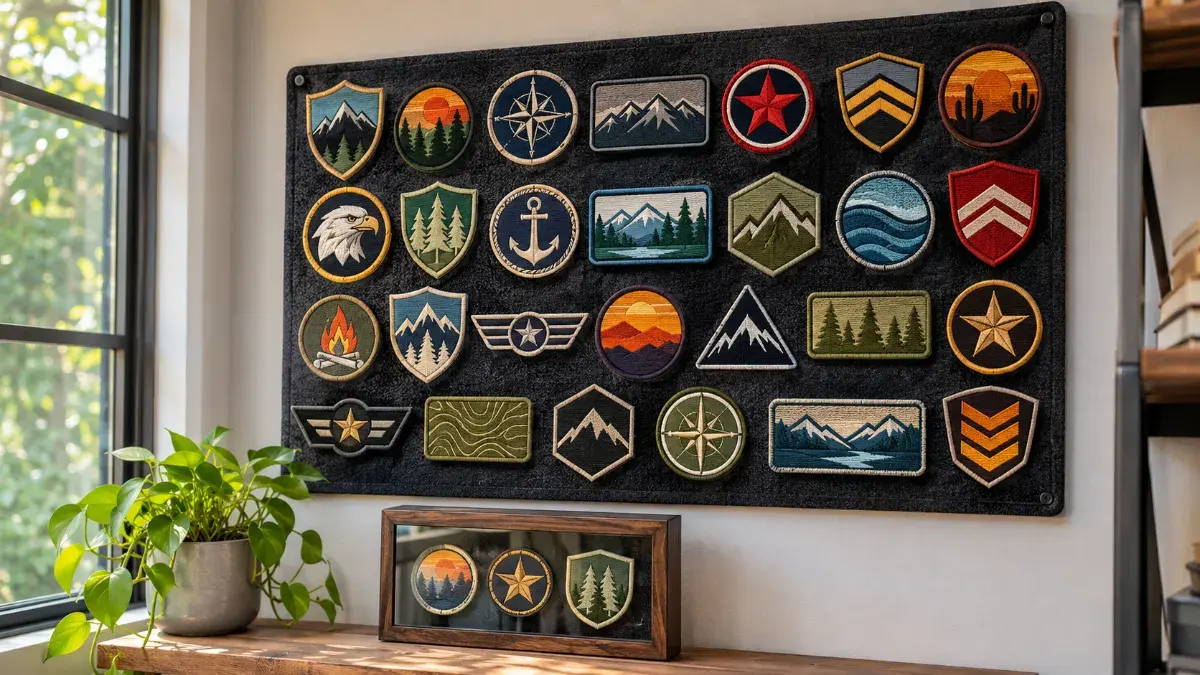
Knowing how to display patches turns a drawer full of loose patches into something you're proud to show off. A good display also protects them from dust, sun and loss.
Below are eight display ideas, from quick Velcro boards to framed shadow boxes. We also cover how to choose the right one for your collection and how to keep your patches looking new.
Patch Display Ideas at a Glance
Start with this comparison. Then read the details for each idea below.
| Display | Best for | Easy to change? | Protection |
|---|---|---|---|
| Velcro patch board | Hook-and-loop patches, growing collections | Yes | Low |
| Shadow box | A few special patches | Somewhat | High |
| Display case | Valuable or older patches | Somewhat | High |
| Picture frame | A single patch or a small set | No | Medium |
| Cork or fabric board | Sew-on and iron-on patches | Yes | Low |
| Binder with sleeves | Large collections and trading | Yes | Medium |
| Jacket, vest or blanket | Patches you want to wear or use | No | Low |
| Hat wall | Hat patches and caps | Yes | Low |
8 Ways to Display Patches
1. Velcro patch board
A Velcro patch board (a loop-fabric panel) is the most flexible way to show hook-and-loop patches. Press patches on and peel them off whenever you like. Large panels can cover a whole wall, and small ones fit on a desk or in a gear room. Patches with sew-on or iron-on backing need a hook backing added first.
2. Shadow box
A shadow box is a deep frame with a glass front. It suits a few meaningful patches, such as a retirement set, a unit patch with medals, or a patch from a first ride. Pin or stitch the patches to the fabric backing so nothing touches the glass.
3. Patch display case
A display case with a glass or acrylic lid keeps dust off older or rare patches. Many collectors of police, fire and military patches use cases with a fabric bottom so the patches can be rearranged.
4. Picture frame
A standard frame works well for one large patch, such as a back patch or a team crest. Mount it on a fabric-covered board so it sits flat and looks finished.
5. Cork or fabric pin board
A cork board covered in felt or canvas is a cheap patch board for sew-on patches. Use small pins at the edges of each patch. It's easy to add new patches as your collection grows.
6. Binder with sleeves
Clear sleeve pages in a binder hold large collections in a small space. They are popular for patch trading, because you can flip through the whole collection in minutes.
7. On a jacket, vest or blanket
Some patches are made to be worn. A denim jacket, a vest or a patch blanket shows a collection and keeps it in use. Sew them on for the longest life.
8. Hat wall
If your patches are on caps, a row of hat hooks or a hat rack turns them into a display. It works well for teams, shops and brands that sell patched hats.
How to Choose the Right Patch Display
The best display depends on three things: the backing on your patches, how often you add new ones and how much protection they need.
- Mostly hook-and-loop patches? A Velcro patch board is the fastest choice.
- A few patches with meaning? Use a shadow box or a frame.
- Rare or older patches? Choose a closed display case away from sunlight.
- A big, growing collection? Start with a binder or a large board.
- Patches for a business or office? A framed set or a branded board looks clean on a wall.
Not sure which backing your patches have? Our guide to patch backing types explains how to tell them apart.
How to Make a Simple Velcro Patch Board
You can make your own patch board in an afternoon. It is a good project for a gear room, an office or a club house.
- 01
Pick a base
Choose a sturdy board, such as plywood, foam board or an old canvas frame. Cut it to the size of your wall space.
- 02
Cover it with loop fabric
Wrap the board in loop fabric (the soft side of hook and loop). Pull it tight and staple it to the back so the front has no wrinkles.
- 03
Add a frame or edge
Trim the edges with wood strips or a simple frame. This hides the staples and makes the board look finished.
- 04
Hang it and add patches
Mount the board with picture hangers or wall anchors. Then press your hook-backed patches on in rows or groups.
Group patches by theme, color or date so the board tells a story. Leave some open space at the edges for new patches as your collection grows.
Tips to Protect Displayed Patches
- Avoid direct sunlight. UV light fades thread and printed colors over time. Use UV-filtering glass for framed patches.
- Keep them dry. Damp walls and basements can cause mildew on fabric patches.
- Don't use strong glue. Glue can stain patches and makes them hard to move later. Pins, stitches or hook and loop are safer.
- Dust gently. Use a soft brush or a lint roller on open boards.
- Label the back. Note where and when you got each patch, so the story stays with the collection.
Custom Patches Made for Display
Clubs, units, teams and brands often order patches that are made to be collected and displayed. Hook-and-loop backing is a popular choice, because the patch can move from a uniform or bag to a patch board. We make embroidered, PVC, woven, chenille and leather patches with sew-on, iron-on, hook-and-loop or adhesive backing.
We usually send a digital proof the same working day, and production starts only after you approve it. Delivery is about 7 days after approval. See our custom Velcro patches, custom military patches and custom police patches, or request a quote.
Frequently Asked Questions
What is the best way to display patches?
For hook-and-loop patches, a Velcro patch board is the easiest. For a few special patches, a shadow box or frame gives more protection. Large collections fit well in a binder with sleeve pages.
How do you display patches without sewing them?
Use a Velcro board for hook-and-loop patches, pins on a cork or fabric board, or sleeve pages in a binder. Shadow boxes with a fabric backing also let you pin patches in place.
Can you put sew-on patches on a Velcro patch board?
Yes, but you need to add a hook backing first. Sew or stick a piece of hook fabric to the back of the patch, then press it onto the board.
How do you display patches in a shadow box?
Cover the back panel with felt or linen, arrange the patches, then pin or stitch each one in place. Leave a little space between patches and make sure none touch the glass.
How do you keep displayed patches from fading?
Keep them out of direct sunlight and use UV-filtering glass for frames and cases. A room with steady temperature and low humidity also helps.