Guides
Velcro vs Iron-On Patches: Which Backing Should You Choose?
By the Nation Patches team · Updated · 6 min read
The choice between Velcro vs iron-on patches comes down to one question: do you want to swap the patch, or keep it on for good? Both backings work well, but they solve different problems.
Hook-and-loop (often called Velcro) lets you remove and replace a patch in seconds. Iron-on backing bonds the patch to fabric with heat for a clean, fixed look. Below, we compare them on hold, fabrics, washing and cost of effort, so you can pick the right one for your order.
Quick Answer
Choose Velcro (hook and loop) if…
You need to swap patches, move them between uniforms or bags, or remove them before washing. Common for tactical gear, duty uniforms, name tapes and morale patches.
Choose iron-on if…
The patch stays on one garment, you want a flat, clean finish, and the fabric is cotton, denim or a cotton blend. Common for jackets, hoodies, tote bags and merch.
Velcro vs Iron-On Patches Compared
| Factor | Velcro (hook and loop) | Iron-on |
|---|---|---|
| Removable | Yes, in seconds | No, it is meant to stay |
| Needs a loop panel on the gear | Yes | No |
| Best fabrics | Any item with a loop panel | Cotton, denim, canvas, poly-cotton |
| Not suited to | Gear without a loop panel (unless you add one) | Nylon, leather, vinyl, heat-sensitive fabrics |
| Washing | Remove first, or press on firmly | Wash inside out, cool water |
| Look | Slightly raised, with panel edges visible | Flat and clean |
| Patch styles | Embroidered, PVC, woven | Embroidered, woven, chenille |
| Typical uses | Uniforms, vests, bags, caps with panels | Jackets, hoodies, totes, retail merch |
How Velcro Patches Work
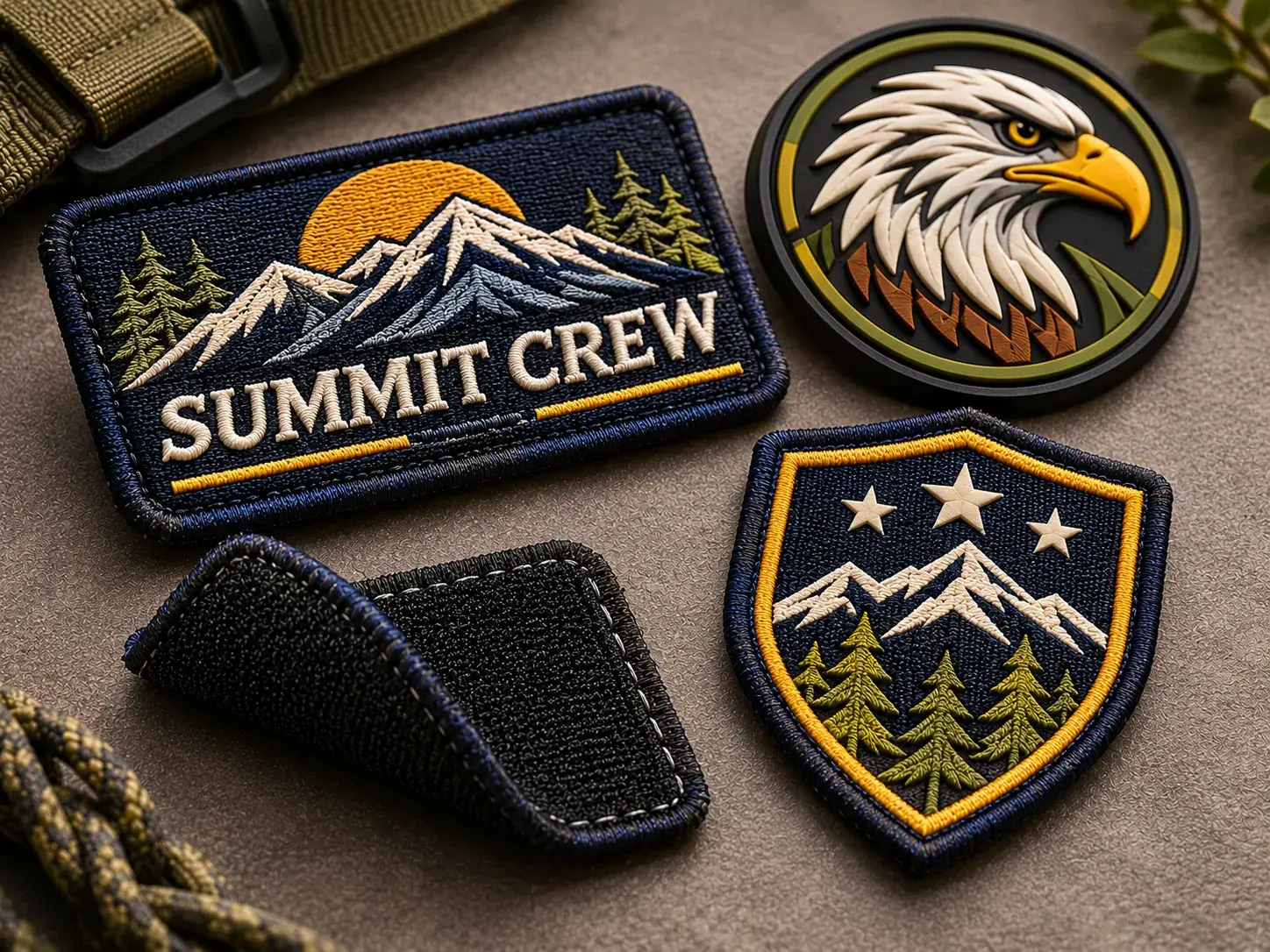
A hook-and-loop patch has the stiff hook side sewn to its back. The soft loop side stays on your gear. Press them together and the patch holds; peel from a corner and it comes off.
Pros
- Swap in seconds. One loop panel can carry many different patches.
- Works with PVC. Rubber patches can't be ironed, so hook backing is the usual choice.
- Easy to wash gear. Take the patch off and wash the garment on its own.
- Good for teams. Issue one uniform and change name, role or unit patches as people move.
Cons
- The gear needs a loop panel. If there isn't one, it has to be sewn on.
- The hook side collects lint over time and needs brushing.
- It sits slightly raised, so it isn't the cleanest look for fashion pieces.
For step-by-step help, read our guide on how to attach Velcro patches.
How Iron-On Patches Work
An iron-on patch has a heat-activated adhesive layer on the back. Heat and firm pressure melt the adhesive into the fabric weave. Once it cools, the patch is bonded in place.
Pros
- No sewing. A household iron or heat press is enough.
- Clean, flat finish. Nothing shows around the edges.
- Fast for merch. Good for applying many patches to hoodies, hats and totes.
Cons
- Not removable once applied.
- Doesn't bond well to nylon, leather, vinyl or water-resistant coatings.
- Heavy wear and hot washes can lift the edges. A few stitches around the border fixes that.
- Not used on PVC patches, because heat damages rubber.
See our full guide on how to iron on a patch for heat, time and pressure settings.
Which Backing for Your Use?
| Use | Recommended backing | Why |
|---|---|---|
| Police, fire and EMS uniforms | Velcro or sew-on | Swappable name and role patches; durable for daily wear |
| Military and tactical gear | Velcro | Plate carriers and packs already have loop fields |
| Morale patches | Velcro | Made to be swapped and collected |
| Motorcycle vests | Sew-on | Heavy wear and leather; iron-on won't bond to leather |
| Team jackets and hoodies | Iron-on or sew-on | Fixed placement on cotton and blends |
| Retail merch and brand labels | Iron-on | Fast to apply and clean looking |
| Backpacks | Velcro or sew-on | Nylon and canvas packs often resist iron-on adhesive |
| Caps and hats | Iron-on, sew-on or Velcro | Depends on the cap; tactical caps often have loop panels |
What About Sew-On?
Sew-on is the most permanent option and works on almost any fabric, including leather and nylon. Many buyers order iron-on patches and add a few stitches for extra hold. Compare every option in our patch backing types guide.
Ordering Velcro or Iron-On Patches
Choose the backing on our quote form, or pick "Not sure" and we'll advise. You'll get a digital proof, usually the same working day, and production starts only after you approve it. Delivery is about 7 days after approval, or up to 10 days for large quantities, with tracking to any US address.
Browse custom Velcro patches and custom iron-on patches, or request a free quote.
Frequently Asked Questions
Are Velcro or iron-on patches better?
Neither is better overall. Velcro is better when you need to remove or swap patches. Iron-on is better for a permanent, flat finish on cotton or denim.
Can I iron on a Velcro patch?
No. Heat can melt the plastic hooks. Sew or iron a loop panel onto the garment instead, then press the hook-backed patch onto it.
Can PVC patches have iron-on backing?
PVC patches usually come with hook-and-loop or sew-on backing, because heat from an iron can damage the rubber.
Do iron-on patches come off in the wash?
Applied correctly, they handle normal washing. Wash inside out in cool water and avoid high dryer heat. For heavy-use items, add a few stitches around the edge.