Guides
Fire Department Patch Design: Maltese Cross, Station and EMS Patches
By the Nation Patches team · Updated · 7 min read
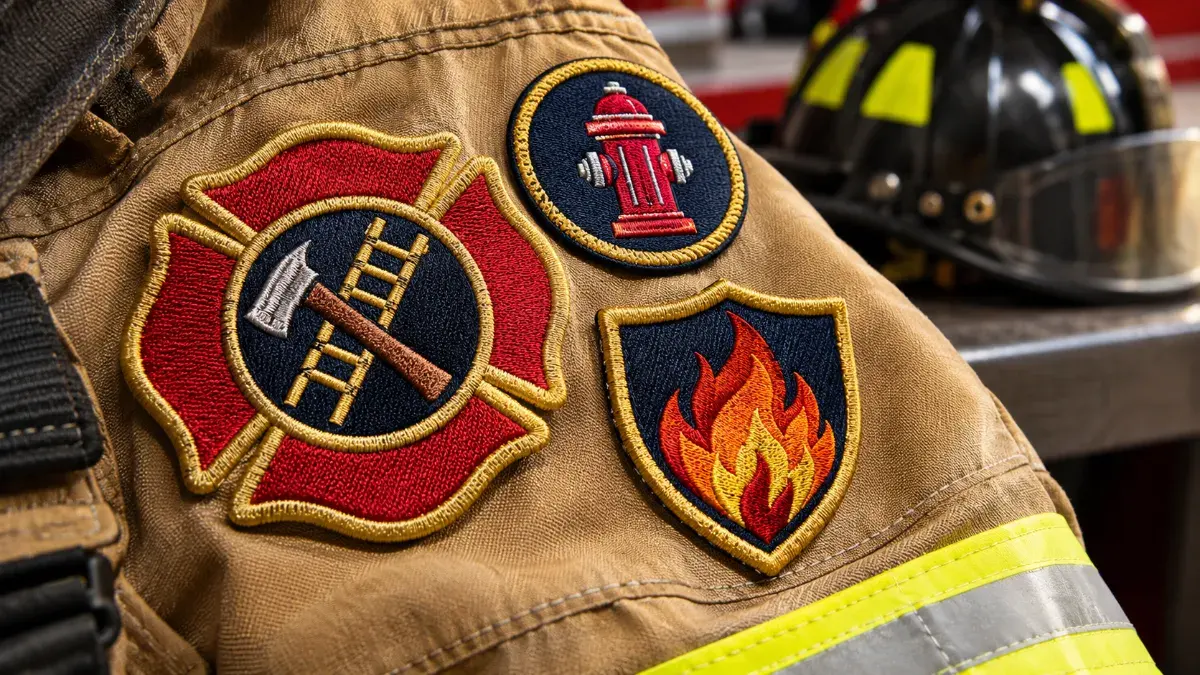
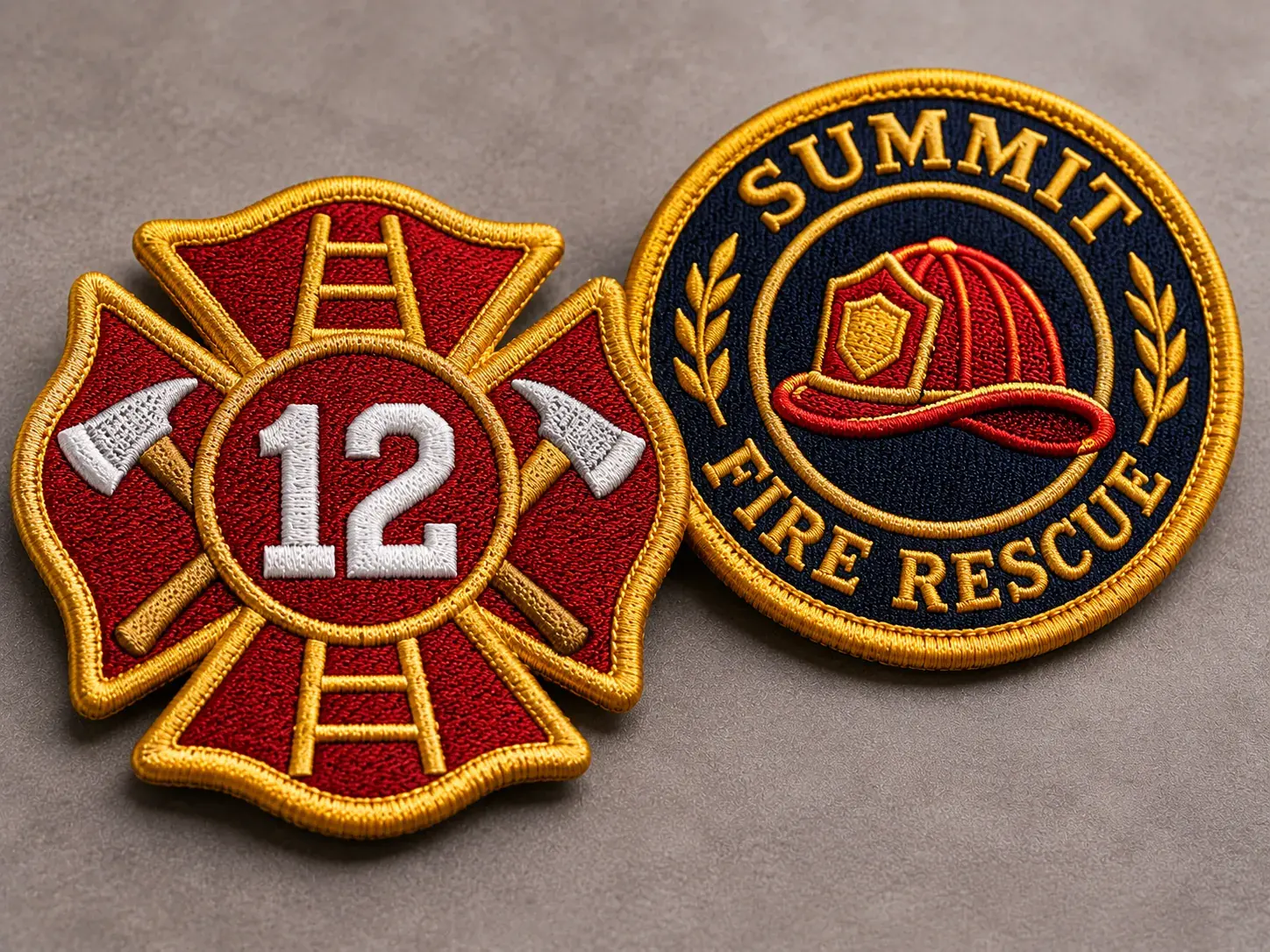
Good fire department patch design starts with a clear plan. Your patch goes on uniforms, jackets, hats and gear for years, so it needs to look right up close and from across the street.
This guide covers the classic Maltese cross layout, station and company patches, EMS patches, colors, sizes and text. Use it to plan a new patch or refresh an old one.
Key Elements of Fire Department Patch Design
Most fire patches share a few common parts. You don't need all of them. Pick the ones that tell your department's story best.
| Element | What it shows | Design tip |
|---|---|---|
| Department or company name | Who you are | Largest text on the patch, in bold letters |
| Maltese cross | The fire service | Use it as the main shape or as a center emblem |
| Station or company number | Which house you serve | Place it in the center for quick recognition |
| City, county or state | Where you serve | Often in a lower arc or banner |
| Year established | Your history | Small text, often near the bottom |
| Tools and symbols | Your work | Axes, ladders, hydrants, helmets or apparatus |
| Motto | Your values | Keep it short so the text stays readable |
Designing a Maltese Cross Patch
The Maltese cross is the best-known symbol of the fire service. Many departments use it as the outline of the patch itself. Others place a smaller cross inside a round or shield patch.
Cross-shaped patches
A patch cut in the shape of the cross stands out on a sleeve. Put the department name across the top arm, the location across the bottom arm and a station number or emblem in the center. Keep the text on each arm short, because the space is narrow.
Cross inside a round or shield patch
A round or shield patch gives more room for text around the edge. The cross then sits in the middle as the main emblem. This layout works well when your department name is long.
Station, Company and EMS Patch Ideas
Many departments use more than one patch. A main shoulder patch is often joined by station patches, specialty team patches and EMS patches.
Station and company patches
A patch for each house, often with the station number, a nickname or a local landmark.
EMS and rescue patches
Patches for EMS crews, often built around the Star of Life symbol used for emergency medical services.
Specialty team patches
Patches for technical rescue, hazmat, water rescue or wildland teams.
Anniversary patches
A one-time patch for a milestone year, often with the founding year and the anniversary year.
Memorial patches
A patch honoring members who have passed, often worn for a set period.
Fundraiser patches
Event patches sold at carnivals, open houses and fund drives.
Before you design an EMS patch with the Star of Life, check any local or state guidance on how the symbol should be used on uniforms.
Colors, Text and Borders
Red, gold, black, navy and white are the classic fire service colors. They also give strong contrast, which keeps text readable.
- Limit the colors. A few strong colors look cleaner than many similar shades.
- Use high contrast. Put light text on a dark background, or dark text on a light one.
- Choose bold fonts. Thin or script fonts blur in thread. Block letters work best.
- Don't shrink the text. If the department name doesn't fit, shorten it or make the patch bigger.
- Pick a border. A merrowed border gives the classic raised edge on round, oval and shield shapes. Heat-cut borders suit detailed shapes like a Maltese cross.
For more design rules, read our guide on how to design a custom patch.
Fire Patch Sizes and Backing Options
| Patch | Typical size | Common backing |
|---|---|---|
| Shoulder patch | 3–4 in | Sew-on |
| Chest emblem | 3–4 in | Sew-on |
| Hat patch | 2–3.5 in | Sew-on or adhesive for heat-applied hats |
| Name tab | 2–3.5 in wide | Sew-on or hook and loop |
| Gear and bag patch | 3–4 in | Hook and loop |
| Jacket back patch | 8 in or more | Sew-on |
Sew-on backing is the standard for station uniforms, because it holds up to repeated washing. Hook and loop lets crews move patches between jackets, bags and gear. Embroidered patches are the traditional choice, while PVC patches suit gear that gets wet and dirty. See our patch size and shape guide for more detail.
A Simple Patch Design Process for Your Department
- 01
Gather ideas from members
Ask members what the patch should say about your department. History, local landmarks and nicknames often make the best design ideas.
- 02
Pick one main symbol
Choose a single focus, such as the Maltese cross, your station number or a local landmark. One strong symbol beats several small ones.
- 03
Sketch at real size
Draw the patch at its actual size, usually 3 to 4 inches for a shoulder patch. This shows quickly if the text is too small.
- 04
Approve the proof
Check the digital proof with your officers. Confirm spelling, numbers, colors and size before production starts.
Common Fire Patch Design Mistakes
- Too much detail. Small apparatus drawings and tiny text turn into blurry shapes in thread.
- Too many words. Department name, location and one more line is usually enough.
- Low contrast. Red text on a black background is hard to read from a distance.
- Mixed sizes across stations. Keep shoulder patches the same size so crews look uniform.
- Skipping the proof. Always check the spelling of names, numbers and dates on the digital proof.
Ordering Custom Fire Department Patches
Send us your current patch, a sketch or just your ideas, along with the size and quantity. We usually send a digital proof the same working day. Production starts only after you approve it. Delivery is about 7 days after approval, or up to 10 days for large quantities. Every batch is inspected before it ships with tracking to any US address.
Learn more about our custom fire department patches and custom embroidered patches, or request a quote.
Frequently Asked Questions
What does the Maltese cross mean on a fire patch?
The Maltese cross is the traditional symbol of the fire service. On a patch, it shows that the wearer belongs to a fire department or fire company.
What should be on a fire department patch?
Most patches show the department name, the city, county or state, and a symbol such as the Maltese cross. Many also add a station number, the year established or a short motto.
What size is a fire department shoulder patch?
Most fire department shoulder patches are 3 to 4 inches. Hat patches are usually 2 to 3.5 inches, and jacket back patches are 8 inches or more.
Can we redesign our old department patch?
Yes. Send us a photo or sample of your current patch and tell us what to keep or change. We'll send a digital proof for your approval before production starts.
Can volunteer fire companies order patches in bulk?
Yes. Bulk and wholesale orders are welcome, including patches for members and fundraiser patches to sell at events.